In this guide
San Diego has good tide pools along most of its rocky coastline, and the best known are at Cabrillo National Monument on the tip of Point Loma. The trick is timing. You need a low tide, ideally a "minus tide" when the water drops below the average low, and the best of those fall in daylight during late fall and winter. Arrive before low tide, stay on bare rock, look without touching, and leave as the water starts to come back.
That's the core of it. Below are the main spots, how to read a tide prediction, the rules in protected areas, and what to wear so you don't end up soaked or sliding into a pool. For more coastal trips, browse the Beaches & Outdoors section.
When to go: reading the tides
Tides along the San Diego coast rise and fall twice a day, and the two lows are rarely the same height. One is often much lower than the other. For tide pooling, you want that lower low, and you want it during daylight.
Minus tides and the best season
A minus tide means the water drops below the zero line on a tide chart, which is the average of the lower low tides. These are the days when the most rock is exposed. The National Park Service says late fall and winter are the best time to visit the Cabrillo pools, because that's when the lowest tides tend to fall during the day. In summer the deepest lows often come at night or very early in the morning.
How to check a tide prediction
NOAA Tides and Currents publishes predictions for station 9410170, San Diego. Pull up the monthly view, look for daytime lows with the smallest or negative numbers, and note the time. Spots farther up the coast are close to the same schedule, but NOAA lists nearby stations with small time offsets if you want more precision.
The National Park Service suggests arriving about two hours before low tide, while the water is still going out, and staying no later than about two hours after. That gives you a long window on the rocks with the tide in your favor.
Where to find tide pools in San Diego
The county's coast mixes long sand beaches with rocky points. Tide pools form on the rocky stretches. Each spot has its own access, parking and rules.
| Area | What it's like | Things to know |
|---|---|---|
| Cabrillo National Monument (Point Loma) | Wide rocky shelf, ranger presence, best-known pools | Entrance fee to the monument, tidepool area closes 4:30 p.m. |
| Ocean Beach and Sunset Cliffs | Rocky reefs below neighborhood streets and bluffs | Steep or eroded access in places, cliff edges unstable |
| La Jolla | Several reefs and coves, some inside protected areas | Busy parking, crowds on weekends |
| North County (for example Swami's in Encinitas) | Reefs exposed at low tide below bluffs | Stairways to the beach, protected-area rules apply |
Cabrillo National Monument
The rocky intertidal zone on the west side of Point Loma is part of Cabrillo National Monument and is managed by the National Park Service. It's the easiest place for a first visit: there's a parking area near the shore, signs explaining what you'll see, and often rangers or volunteers on busy low-tide days. You pay the monument's entrance fee to drive in. The NPS site lists current fees and passes.
Ocean Beach and Sunset Cliffs
South of the Ocean Beach Pier, the shoreline turns rocky and you'll find pools on low tides. Farther south, Sunset Cliffs has reefs below the bluffs. Access here is the issue. Some paths down are steep or crumbling, and the bluff edges can collapse. Our Sunset Cliffs guide covers safe access, and our Ocean Beach guide explains parking and the neighborhood around it.
La Jolla
La Jolla has several rocky stretches that show tide pools at low tide, from the coves near the Village to the reefs north of Scripps Pier. Several of these areas are marine protected areas. Crowds and parking are the main challenges. If you're heading there anyway, our La Jolla Cove guide covers sea lions and visiting responsibly.
North County
Rocky reefs show up along parts of the North County coast, including below the bluffs at Swami's in Encinitas, which sits inside a state marine conservation area. Access is usually by stairs from the bluff top. Expect fewer facilities than at Cabrillo.
What you might see
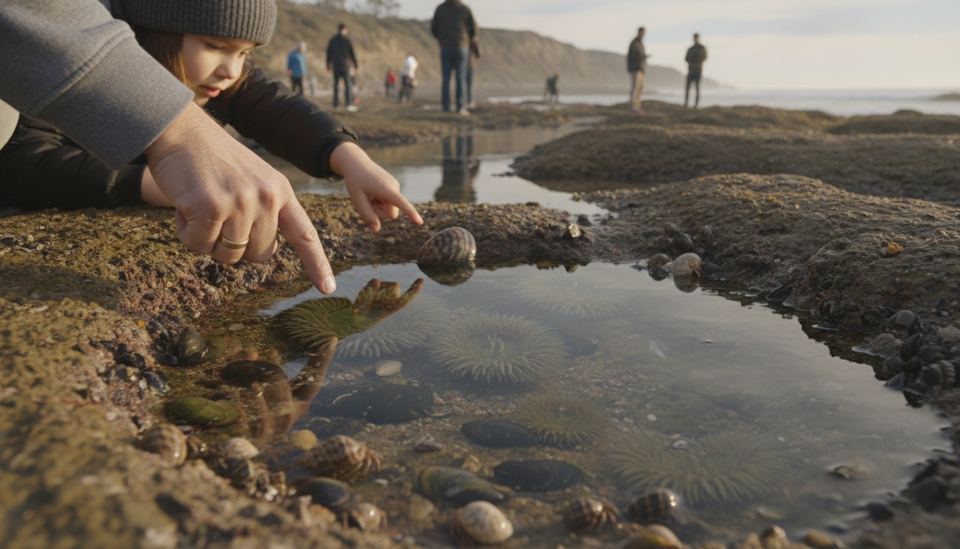
Tide pools in San Diego can hold green and aggregating sea anemones, hermit crabs and shore crabs, sea stars, sea hares, limpets, chitons, mussels and barnacles. With patience and a very low tide you might see a nudibranch or an octopus tucked under a ledge. Most animals hide during the day, so move slowly and look into cracks and under overhangs rather than turning things over.
These animals live a hard life of pounding waves, sun and exposure twice a day. A careless footstep or a flipped rock left upside down is often what kills them.
Rules: protected areas and tide pool etiquette
Marine protected areas
The California Department of Fish and Wildlife manages a network of marine protected areas (MPAs) along the coast. Several San Diego tide pool areas are inside them. In state marine reserves, taking any marine life is prohibited. State marine conservation areas allow only specific, limited take. A San Diego County MPA guide sums it up for tide pools: explore, but don't remove or disturb anything, including by touching.
Outside MPAs, state fishing regulations still apply, and the CDFW requires a fishing license for anyone 16 or older who takes marine life. The simplest approach is the same everywhere: look, take photos, take nothing.
How to behave on the rocks
These habits protect the animals and you:
- Step on bare rock or sand, not on mussels, algae or anemones.
- Leave animals where they are. If you lift a rock to peek, put it back exactly as you found it, gently.
- Don't poke anemones or pull limpets and snails off the rock.
- Keep dogs off the reef. Many beach rules ban or limit them anyway.
- Pack out everything you bring.
San Diego Coastkeeper makes the same point in its tide pool guidance: these courtesies apply to all tide pools, not only protected ones. Violations inside an MPA can be reported to CDFW's CalTIP line at 1-888-334-2258.
Staying safe
The ocean doesn't stop being the ocean at low tide. Sets of larger waves arrive without warning, even on calm days. Never turn your back on the water, and keep children within arm's reach on the outer rocks.
Wet rock covered in algae is slippery. Wear shoes with real grip that can get wet, such as old sneakers or water shoes with firm soles. Flip-flops are a bad idea. Bring a light layer, since winter lows can come with cool wind, and pack water and sun protection even on overcast days.
Watch the clock. Once the tide turns, water fills low channels behind you faster than you'd expect, and you can get cut off from the beach on a reef. Leave earlier rather than later. Near cliffs, stay away from both the base and the edge, as bluffs along this coast erode and collapse.
Making a morning of it
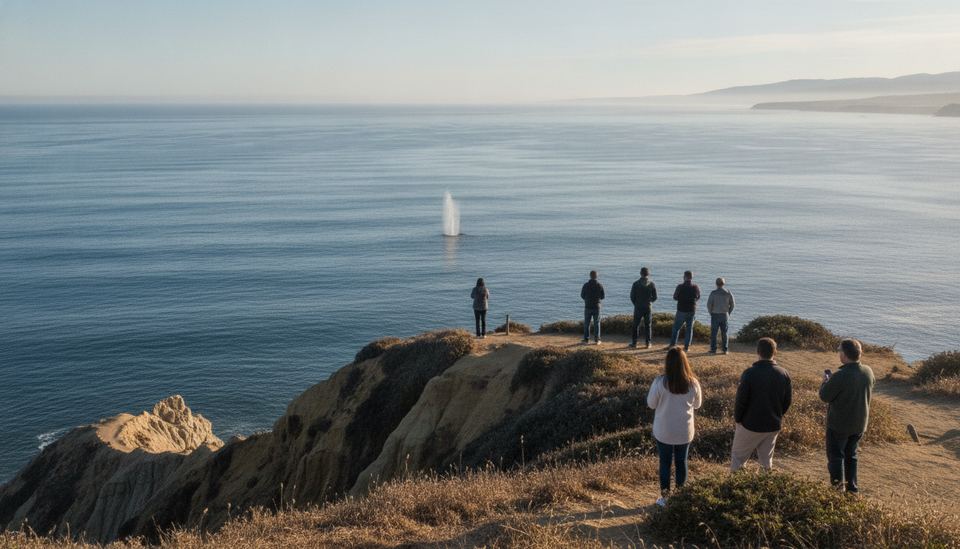
Tide pooling pairs well with other coastal stops. At Cabrillo you can walk to the old lighthouse and the overlooks. In winter you might spot gray whales offshore from Point Loma; our whale watching guide explains the seasons. And if the tide doesn't cooperate, a sandy beach nearby is always a fine backup.
Pick a minus tide, get there early and slow down. Ten quiet minutes beside one pool often shows you more than an hour of rushing from rock to rock.
Put it in order
Put your tide pool trip in order
Move these steps into the order you'd follow for a tide pool visit in San Diego.
- Arrive about two hours before low tide, while the water is still going out
- Find a daytime minus tide on NOAA's predictions for station 9410170
- Walk on bare rock and look into cracks without moving animals
- Check closing times, protected-area rules and the surf for your spot
- Head back to the beach as the tide turns, before channels fill behind you
It's covered in the section When to go: reading the tides
- Find a daytime minus tide on NOAA's predictions for station 9410170
- Check closing times, protected-area rules and the surf for your spot
- Arrive about two hours before low tide, while the water is still going out
- Walk on bare rock and look into cracks without moving animals
- Head back to the beach as the tide turns, before channels fill behind you
Next up: Pair your low tide with a walk around Ocean Beach, the neighborhood next to the reefs.
Questions readers ask
When is the best time to see tide pools in San Diego?
During low tide, especially minus tides. The National Park Service says late fall and winter are the best season at Cabrillo National Monument, and suggests arriving about two hours before low tide.
Where are the best tide pools in San Diego?
Cabrillo National Monument on Point Loma is the best known. Other rocky areas include the Ocean Beach and Sunset Cliffs shoreline, several spots in La Jolla and parts of North County such as Swami's in Encinitas.
Can you take shells or animals from San Diego tide pools?
In marine protected areas, no. Many San Diego tide pools are inside protected areas where taking or disturbing marine life is prohibited. Outside them, state fishing rules and license requirements still apply.
How do I check the tide in San Diego?
Use NOAA Tides and Currents predictions for the San Diego station (9410170) or a nearby station, and look for the lowest daytime tides of the month.