In this guide
June Gloom is the gray, low cloud cover that hangs over coastal San Diego on many mornings in late spring and early summer. Its earlier version in May has its own nickname, May Gray. Both come from the marine layer: cool, damp air off the Pacific that gets trapped under a lid of warmer air and grows a flat sheet of clouds on top.
The short version for planning: the gloom is thickest at the beach and in the morning. It usually thins from mid-morning to early afternoon, and it clears sooner the farther inland you go. Some days it never leaves the coast at all. If you're new here and wondering why your "sunny San Diego" June looks like a London morning, this is why. For more on everyday life here, see our Living in San Diego section.
What the Marine Layer Is
The marine layer is a mass of air that sits over the ocean and has been cooled by the cold water below it. On its own, cool air near the surface isn't unusual. What makes San Diego's marine layer so persistent is what sits on top of it.
The Inversion Lid
Normally, air gets cooler as you go up. Along the Southern California coast, there's often a layer where that flips and the air gets warmer with height. Meteorologists call that a temperature inversion. The National Weather Service describes the cooler air below the inversion as the marine layer, cooled to the point where clouds form.
Because warm air sits on top of cool air, the cool layer can't rise and mix away. It's stuck. Moisture builds up under the lid, and a flat deck of stratus cloud forms at the top of the marine layer. From below, it looks like a gray ceiling. From a mountaintop inland, it looks like a white sea filling the valleys.
Fog, Clouds and Drizzle
The marine layer and its clouds aren't the same thing. The National Weather Service points out that once the low clouds burn off, the marine layer itself is usually still there, which is why the beach can feel cool even under a blue sky.
How the gloom looks depends on how deep the layer is:
| Marine layer depth | What you'll usually see |
|---|---|
| Shallow | Fog at the beach, sun just a few miles inland |
| Moderate | Overcast coast and western valleys, clearing late morning or early afternoon |
| Deep | Clouds pushing far inland, slow clearing, sometimes light drizzle |
The NWS JetStream weather school notes that high pressure aloft squeezes the marine layer down, while low pressure aloft lets it deepen, at times to several thousand feet.
Why It Peaks in May and June
The Ocean Warms Slowly
In spring, the sun heats the land and the air above it quickly. The ocean takes much longer to warm up. NWS San Diego forecasters have explained in local coverage that this lag increases the temperature difference between the cool air at the surface and the warmer air above it, which strengthens the inversion. A stronger lid means a more stubborn marine layer.
Local reporting on NWS San Diego climate data has shown May and June to be the cloudiest months at the coast, with clear days less common than at any other time of year.
Why It Fades in Summer
As summer goes on, the ocean finally warms and the inversion weakens. Researchers at UC San Diego's Scripps Institution of Oceanography have also found that moisture from the North American Monsoon, arriving above the cloud tops in July through September, helps thin the low clouds in Southern California. In Northern California, where the monsoon has less influence, low clouds tend to hang on longer through August.
That's why gloom can stretch into July in some years and why the timing varies so much. One year's June can be mostly sunny; another's can be gray for weeks.
When Does June Gloom Burn Off?
"Burn off" is a bit misleading. The sun heats the ground under and around the clouds, the air in the marine layer warms and mixes, and the cloud deck thins from the edges. Inland areas warm fastest, so they clear first. The coast clears last, if at all.
A Rough Map of the Day
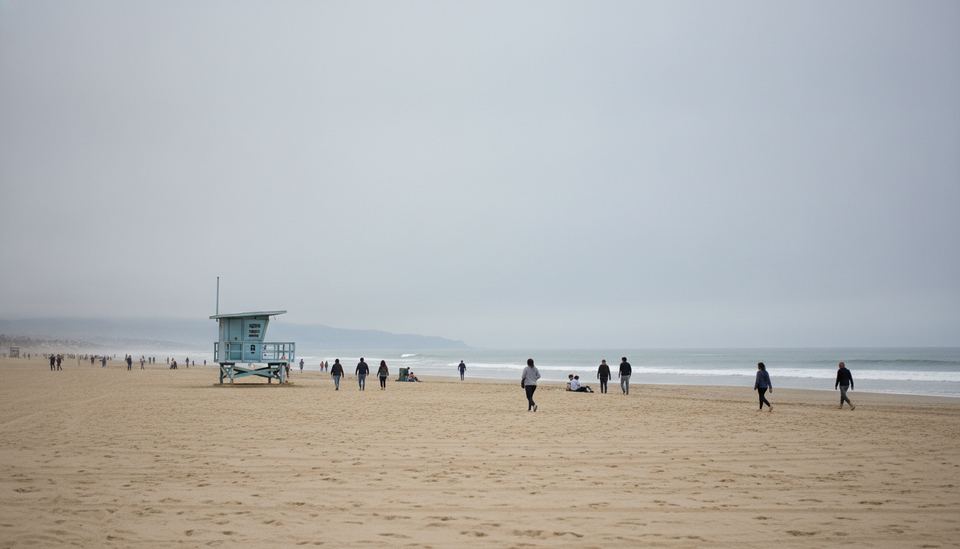
On a typical gloomy morning, the clouds might stretch from the beaches well into the inland valleys. By mid-morning, inland communities often see breaks. By early afternoon, the edge of the clouds has usually pulled back toward the coast. Beach neighborhoods sometimes stay gray all day, and the clouds often roll back in after sunset.
Reading the Forecast
The National Weather Service San Diego office writes a forecast discussion that usually mentions the marine layer's depth and how far inland the clouds will reach. Words like "deep marine layer" mean slow clearing and maybe drizzle. "Shallow" or "compressed" usually means fog at the beach and sun just inland. Satellite loops on the same site show the cloud edge moving, which is handy on a beach morning.
Living With the Gloom
Beach Days
Plan beach time for the afternoon in May and June. If you go in the morning, pick an activity that doesn't need sun. Low tide in the morning is a classic gloom-day plan: our guide to tide pools explains how to time it. For choosing a stretch of sand, our overview of San Diego beaches can help you pick one.
Escaping Inland
When the coast is stuck under clouds, a short drive east often puts you in sunshine. A morning hike to a summit inland, like Potato Chip Rock, can lift you above the cloud deck for that white-sea view. Inland sun also means inland heat, so carry water.
Around the House
The marine layer brings damp mornings to coastal homes. Windows fog up, laundry dries slowly outside, and bikes left in the open pick up a film of salty moisture. As someone who works on bikes, I'd tell you to wipe down your chain after a few gray weeks at the coast and keep it lightly lubed. A garage or covered spot helps more than you'd expect.
On the Road
When the marine layer sits right on the ground, visibility on coastal freeways and canyons can drop quickly. Slow down, use low beams, and leave extra space. The fog often lifts within a few miles inland.
The Gloom Versus Santa Ana Weather
San Diego's two most talked-about weather patterns are near opposites. The marine layer brings cool, moist ocean air onshore. Santa Ana winds bring hot, very dry air from the interior out toward the coast, usually in fall and winter, and they wipe out the marine layer while they blow. If you've lived here a full year, you'll notice how differently the two feel: one damp and gray, the other bright, dry and dusty.
Is June Gloom Going Away?
Scientists are studying how a warming climate may change coastal low clouds, and Scripps researchers have described these clouds as one of the harder pieces to pin down in climate projections. Coastal clouds do a lot of work here. Researchers at Scripps have linked the absence of marine stratus during heat waves to sharply higher coastal temperatures. So while the gloom can be annoying in June, it's also part of why coastal San Diego stays mild when the rest of Southern California bakes.
True or false?
June Gloom: true or false?
Five quick statements about San Diego's marine layer. Pick true or false for each.
The marine layer is cool, moist air trapped under a layer of warmer air.
It's covered in the section The Inversion Lid
Warm air above cool air forms an inversion, which traps the marine layer and lets a flat cloud deck form at its top.When the clouds burn off, the marine layer is gone too.
It's covered in the section Fog, Clouds and Drizzle
The National Weather Service points out that the marine layer is usually still there after its low clouds clear, which is why the beach can stay cool under a blue sky.The gloom peaks in late spring partly because the ocean warms more slowly than the land and the air above it.
It's covered in the section The Ocean Warms Slowly
That lag widens the temperature difference between surface air and the air above, which strengthens the inversion.June Gloom usually clears at the beach first and inland last.
It's covered in the section When Does June Gloom Burn Off?
It's the other way around: inland areas warm fastest and clear first, and the coast clears last, if at all.You can get sunburned on an overcast June Gloom beach day.
It's covered in the section Reading the Forecast
Ultraviolet light passes through thin clouds, so sunscreen and a hat still matter.
Next up: A gray morning plan: tide pools in San Diego, where and when to go
Questions readers ask
What causes June Gloom in San Diego?
A layer of warm air sits on top of cool, moist air over the ocean. That warm lid, called an inversion, traps the cool marine layer underneath, and low stratus clouds form at its top. In late spring the ocean is still cold while the air above warms, which keeps the lid strong.
When does June Gloom burn off?
Usually between mid-morning and early afternoon, and earlier the farther you are from the coast. On days when the marine layer is deep, beaches can stay overcast all day.
Is June Gloom the same as fog?
Not exactly. The marine layer is the cool air mass itself. When its clouds sit high, you get an overcast sky; when they touch the ground, you get fog. The clouds can clear while the cool marine air stays in place.
How long does June Gloom last?
It is most common in May and June but can continue into July and sometimes August. It varies a lot from year to year.
Can you get sunburned during June Gloom?
Yes. Ultraviolet light passes through thin clouds, so the sun can burn you on a gray beach day. Use sunscreen even when it looks overcast.