In this guide
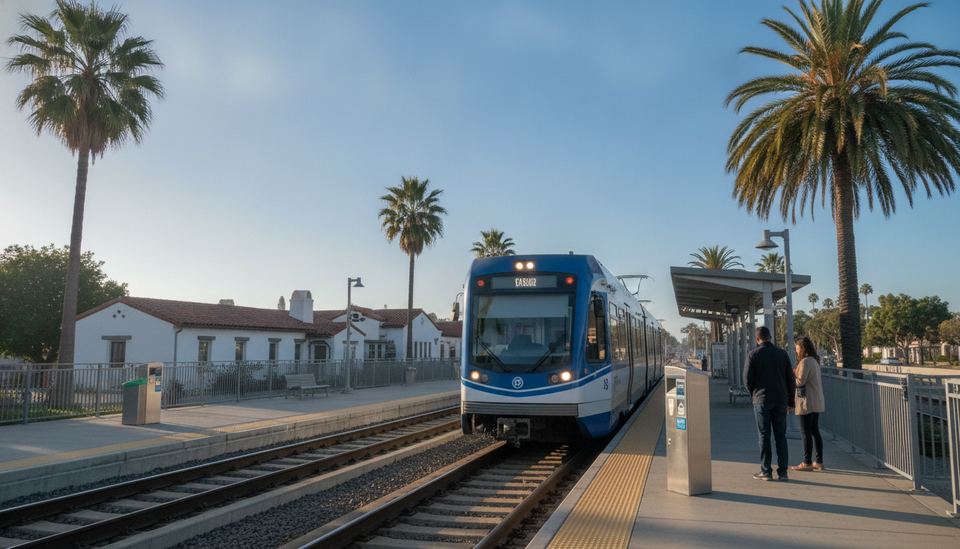
The San Diego Trolley is the light rail network run by the Metropolitan Transit System (MTS). Five lines share a downtown core and fan out to the Mexican border at San Ysidro, to UC San Diego and University Towne Centre, through Mission Valley to San Diego State, and east to El Cajon and Santee. You pay with PRONTO, the regional fare card and app, and you tap before you board.
If you only need the short version: buy nothing at the station, download the PRONTO app or pick up a card, tap the validator on the platform, then step on. The rest of this guide covers which line goes where, what the fare change of October 1, 2026 means for you, and the small rules that trip up first-time riders. For buses, trains and parking, the Getting Around section has the other guides.
The trolley lines at a glance
All the lines meet downtown, and several share track through the core. Colors matter more than numbers here: signs, maps and the trains themselves use the line color.
| Line | Main stretch | Good for |
|---|---|---|
| UC San Diego Blue Line | San Ysidro to downtown, Old Town and UTC | The border, Old Town, UC San Diego, Chula Vista |
| Orange Line | Downtown east through Lemon Grove and La Mesa to El Cajon | East County commutes, Lemon Grove, La Mesa |
| Green Line | 12th & Imperial through Old Town and Mission Valley to SDSU and El Cajon | Mission Valley malls, stadium area, San Diego State |
| Copper Line | El Cajon to Santee | Santee riders connecting to the Green and Orange lines |
| Silver Line | Downtown loop with restored vintage cars | A sightseeing ride on a limited schedule |
UC San Diego Blue Line
This is the line most visitors end up on. It runs from San Ysidro, steps from the border crossing, north through National City and Chula Vista, across downtown, through Old Town and up to UTC. The northern piece is the Mid-Coast extension, which SANDAG opened on November 21, 2021 with nine new stations north of Old Town. That extension is why you can now ride from the border to the UC San Diego campus without changing trains.
Orange Line
The Orange Line serves downtown and then heads east through southeastern San Diego, Lemon Grove and La Mesa before ending in El Cajon. Downtown, it shares stations with the other lines, so check the color on the front of the train before you get on.
Green Line
The Green Line is the Mission Valley line. It runs from 12th & Imperial downtown, along the bay to Old Town, then east through Mission Valley, past the stadium area to San Diego State and on to El Cajon Transit Center. In September 2024, MTS cut its eastern end back to El Cajon and handed the Santee section to a new line.
Copper Line
The Copper Line is a short shuttle between El Cajon and Santee. MTS created it in 2024 to separate East County trips from the longer Green and Orange runs, a change the agency said would help reliability. If you live in Santee, expect to transfer at El Cajon.
Silver Line
The Silver Line loops around downtown with restored vintage trolley cars. It runs on a limited schedule, so treat it as a ride for the fun of it and check the MTS site before you plan around it.
Fares and PRONTO
PRONTO is the fare system for MTS and North County Transit District buses and trains. It comes as a reloadable card or a phone app. Load money, tap or scan at the validator, and the system works out your fare.
What changed on October 1, 2026
In July 2026, SANDAG approved the first regional transit fare increase in years, in two steps. According to the SANDAG news release, the first step took effect October 1, 2026 and the second is scheduled for October 1, 2027. Under the first step, the adult one-way regional fare on buses and the trolley went from $2.50 to $3, and the adult monthly pass from $72 to $85. Reduced fares for seniors, riders with disabilities and Medicare cardholders rose too.
Because the change is recent, check the fares page on the MTS website before you load money, especially for the daily cap and reduced fares.
How fare capping works
PRONTO uses capping instead of selling you a pass up front. Each tap is charged as a one-way fare, and once your taps in a day add up to the day pass price, the rest of your rides that day are free. The same idea applies over a month. You never pay more than the pass would have cost, and you do not have to guess in the morning how much you will ride.
A one-way fare paid with PRONTO also includes a free transfer for two hours. Cash fares bought at a ticket machine get neither the transfer nor the cap, according to the PRONTO rider guide published by MTS. If you plan more than one ride, the card or app pays for itself quickly.
Free and reduced fares
Riders 18 and under ride free through the Youth Opportunity Pass, run by MTS and NCTD with funding from SANDAG and the County of San Diego. They need their own Youth PRONTO card or app account, and each tap is recorded as a free ride. Visitors under 19 qualify too, according to MTS. Kids 5 and under ride free at all times and do not need a card.
Seniors, riders with disabilities and Medicare cardholders pay a reduced fare once their PRONTO account is set up for it. MTS and NCTD also launched PRONTO LIFE on October 1, 2026, a program that lets qualifying low-income riders keep paying the earlier adult fares on regional buses and the trolley.
How to ride, step by step
The trolley uses an honor system with spot checks. There are no turnstiles.
At the station
Find your platform by line color and direction. Station signs list the end of the line, so know whether you are heading toward, say, UTC or San Ysidro. Tap your card or scan the app QR code at the validator on the platform, then wait behind the yellow strip.
On board
Trains run as several linked cars. Doors open with a button on many cars, so press it if the door stays shut. Announcements and screens name each stop. If you are going to Old Town or downtown, you will have plenty of company, and the stops come quickly.
Transfers
Downtown stations and Old Town are the main transfer points. Old Town connects the Blue and Green lines and also links to the COASTER commuter train and many bus routes. El Cajon Transit Center ties the Orange, Green and Copper lines together. With PRONTO, a transfer within two hours costs nothing extra.
Bikes, strollers and luggage
According to the MTS bikes page, you can bring one bicycle per trolley car during peak travel times and two per car at other times. Bikes ride free with a paying rider, and you have to stay with your bike for the whole trip. Gas-powered bikes and e-bikes with liquid lead-acid batteries are not allowed.
Strollers and carts are fine as long as they do not block aisles and doors. MTS posts its full rules for riding on its website. If you ride with a full-size bike at rush hour, board at the end of the train, where cars tend to be emptier.
Where the trolley is most useful
For visitors, the Blue Line covers the border, downtown and Old Town in one ride. The Green Line is the easy way to Mission Valley and to big games or concerts near San Diego State, since driving and parking there can take longer than the ride itself.
For residents, the trolley works best when both ends of your trip are near a station. A commute from Chula Vista to downtown, or from La Mesa to Mission Valley, is often simpler on rails than in traffic. Neighborhoods away from the lines, like North Park, rely on buses instead; our North Park guide covers how people get around there.
The trolley does not reach the beaches directly. To get to the coast, you will usually transfer to a bus at Old Town or downtown. Our guide to San Diego beaches helps you choose which stretch of sand is worth that trip. And if you are spending a day at Balboa Park, plan on a bus or a walk from downtown, since no trolley line stops at the park itself.
A few practical habits
Check service alerts on the MTS website or app before you leave, especially on weekends, when track work can cause bus bridges between stations. Late at night, trains run less often, so look up the last departure on your line if you are heading out for the evening.
Keep your PRONTO balance topped up with autoload if you ride often. And when you are not sure which train to take downtown, read the color on the front of the car rather than counting on the platform. Several lines stop at the same platforms there, and the color tells you where that train is going.
Match them up
Which trolley line gets you there?
Match each destination with the trolley line that serves it.
It's covered in the section The trolley lines at a glance
San Ysidro, at the border : UC San Diego Blue Line
UC San Diego and UTC : Blue Line via the Mid-Coast extension
Mission Valley and San Diego State : Green Line
Lemon Grove and La Mesa : Orange Line
Santee : Copper Line from El Cajon
A loop downtown in vintage cars : Silver Line
Questions readers ask
How much does the San Diego Trolley cost?
Under the SANDAG fare change that took effect October 1, 2026, the adult one-way regional fare is $3 and the adult monthly pass is $85. Check the MTS fares page for the current day cap and reduced fares.
Does the trolley go to the Mexican border?
Yes. The UC San Diego Blue Line ends at San Ysidro, a short walk from the pedestrian border crossing.
Can I pay cash on the trolley?
You can buy a one-way fare with cash at a ticket machine, but cash fares do not include the free two-hour transfer and do not count toward the daily cap. PRONTO does both.
Do kids ride free?
Children 5 and under ride free without a card. Riders 18 and under ride free through the Youth Opportunity Pass when they tap a Youth PRONTO card or app.
Can I bring a bike on the trolley?
Yes. MTS allows one bike per trolley car at peak times and two at other times, and you have to stay with your bike.